01
Aomori Nebuta Festival
Aomori City · August 2–7
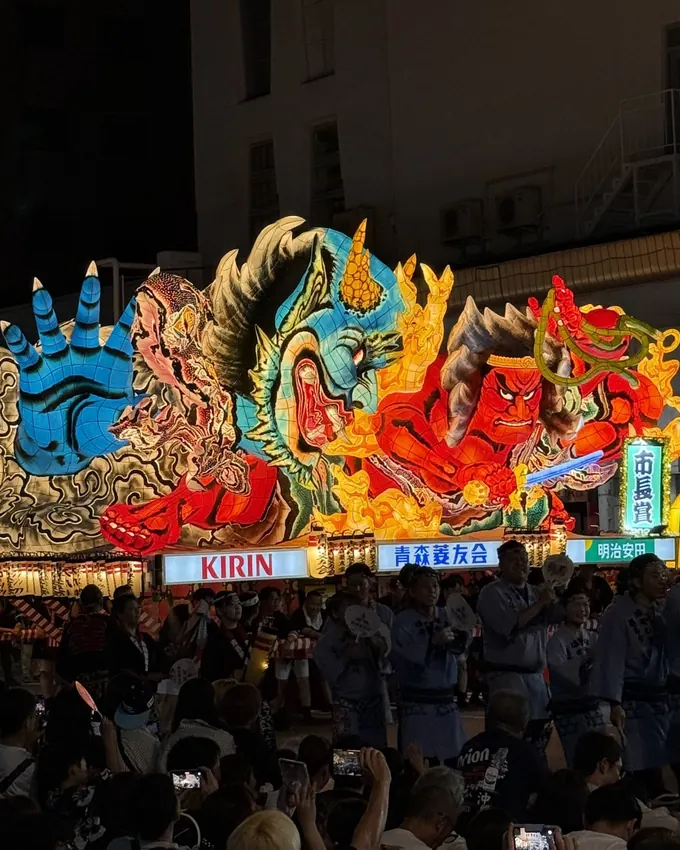
In the first week of August, huge illuminated floats of warriors and gods — rebuilt from wire and washi paper every year — are hauled through the streets of Aomori City. Thousands of haneto dancers jump alongside to taiko drums and flutes, chanting “rassera”. This is the loud one: physical, close, and over in a week.
02
Goshogawara Tachineputa
Goshogawara · August 4–8
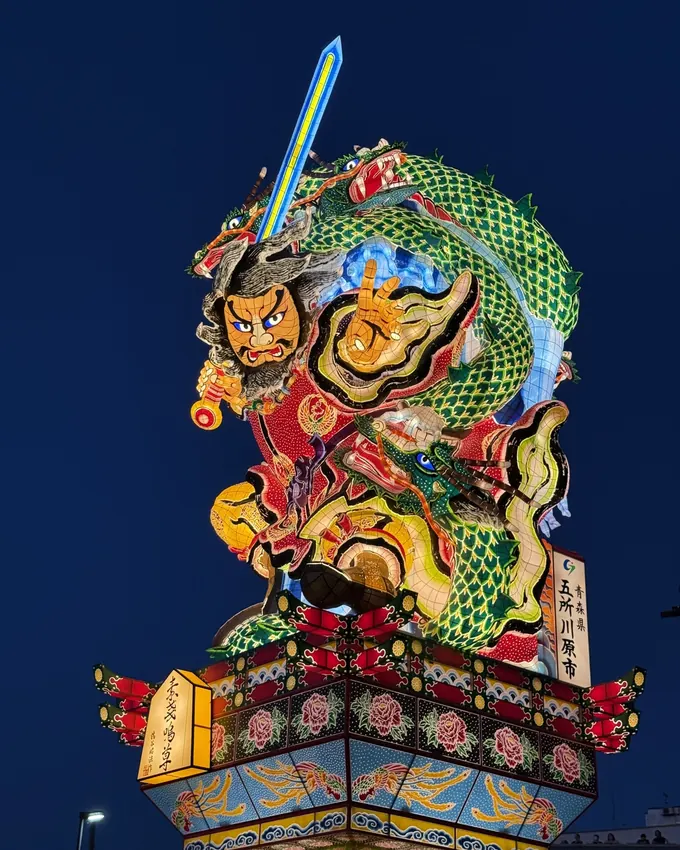
In the smaller town of Goshogawara, the floats stand upright — around 23 meters and 19 tons, the height of a seven-story building. Giants like these paraded here in the Meiji era, said to be visible from villages 12 kilometers away, then vanished for most of a century. Old blueprints resurfaced in 1993; citizens funded a 16-meter revival in 1996, and from 2000 the town moved its power lines underground so the giants could walk the streets again. The chant here is “yattemare” — and ask around Aomori, and this is the one locals quietly call their favorite.
03
Hirosaki Neputa
Hirosaki · August 1–7
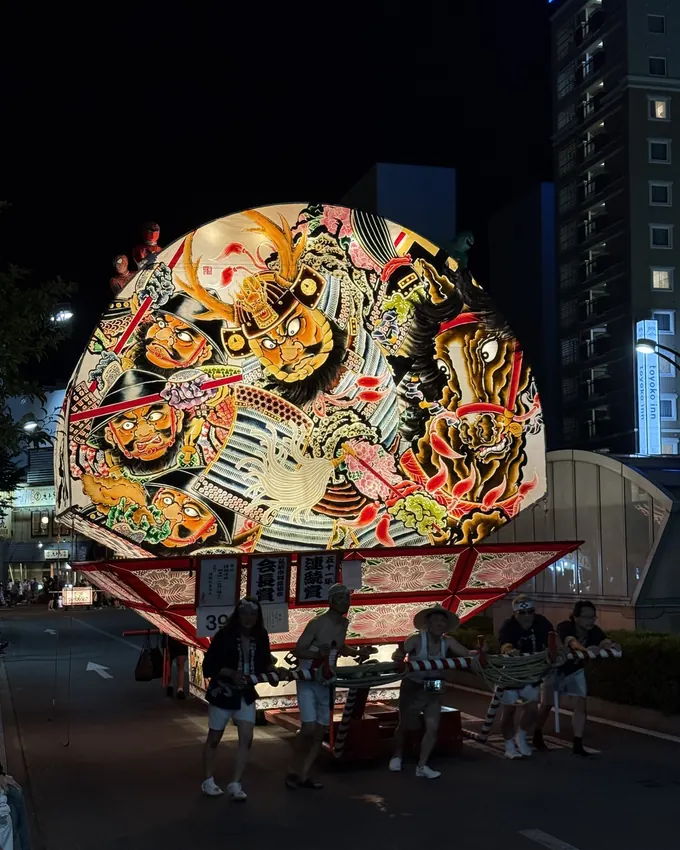
In the castle town of Hirosaki, the floats are fan-shaped — a battle scene painted on the front, and on the back a quieter, sorrowful figure to see the float off. The pace is slower and the mood more solemn than its neighbors: closer to a procession than a street party.
All three happen in Aomori, at the far northern tip of Japan's main island, in the same first week of August — a corner of the country most itineraries skip. None of it is staged for visitors; the floats roll through public streets whether anyone from outside is watching or not.